Showing posts with label garden. Show all posts

Sunday, November 8, 2020

When Winter Comes Early


“Consider the lilies, how they grow: they neither toil nor spin, yet I tell you, even Solomon in all his glory was not arrayed like one of these.” Luke 12:27 (ESV)

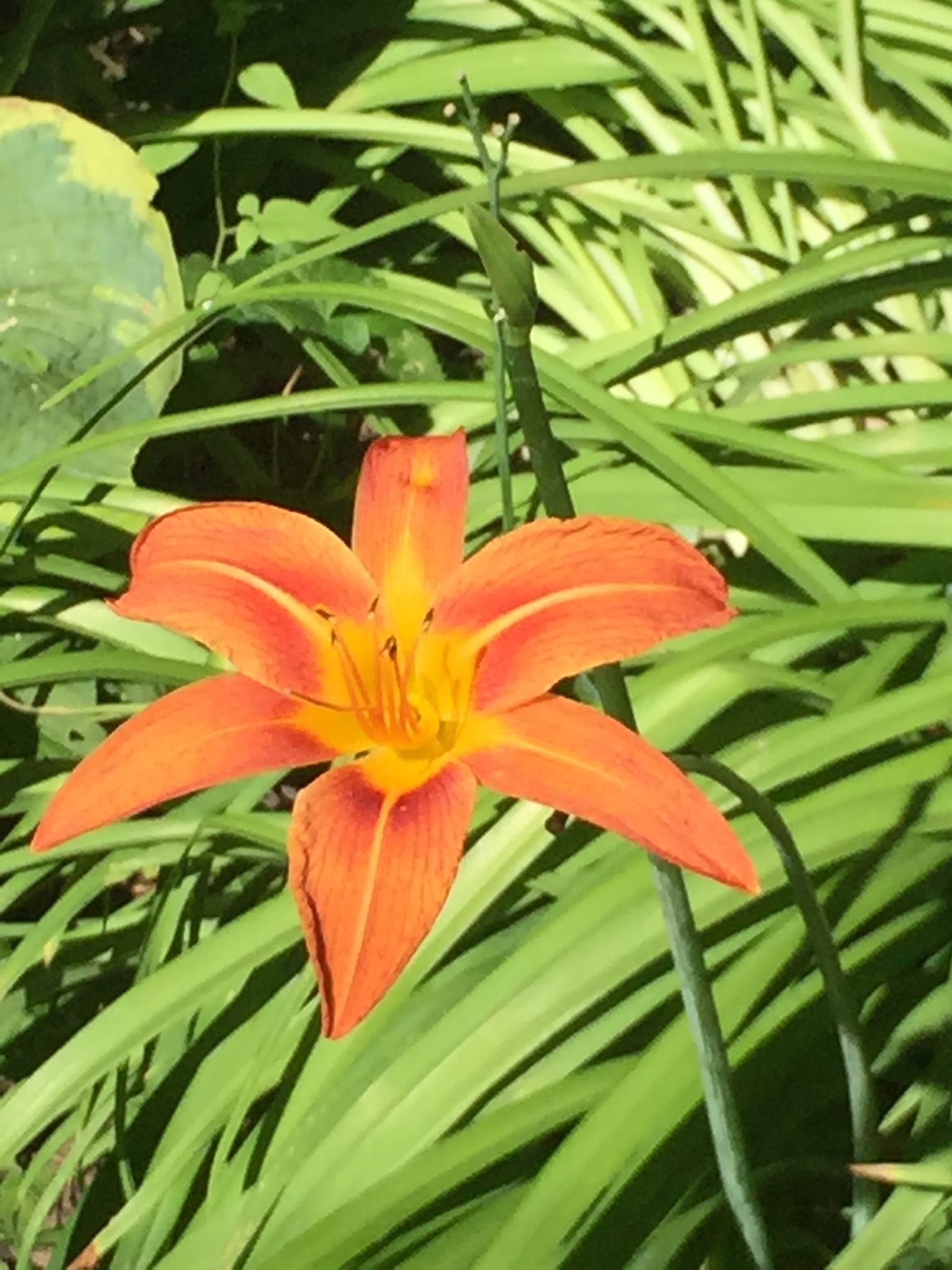
Our first snowfall cam a bit early this year. In many ways, the year 2020 has seemed liked an endless winter. During the COVID-19 lockdown in the spring, I was grateful for the refreshing beauty of our Idaho garden. Throughout the summer, I wanted to hold onto the colors and fragrances of the roses, mock orange, day lilies and — most of all — the purple lilac.


Purple lilac is the state flower of my native state, New Hampshire, and its sweet fragrance always triggers fond childhood memories. This year, the memories were especially poignant as my mom moved into a nursing home after a heart attack in July. The restrictions of COVID-19 made visits few and far between. I spent many afternoons sitting in our backyard, talking to my mom on the phone while looking at our beloved flowering shrubs and vines. 

When my mom passed away in October, the dwindling daylight hours matched my darkened state of mind. Grief became a heavy blanket that threatened to smother me. I desperately looked for a sign of hope. 


I found that sign in our lilac shrub, which holds springtime in its branches, even when winter comes early! You see, lilacs begin to form next year’s flower buds soon after they finish blooming. If you look closely, you can see these buds at the ends of the branches. 


It’s like seeing next spring in the middle of winter! I love that about plants — when the landscape looks dead and dreary, good things are already happening. 

“The flowers appear on the earth, the time of singing has come, and the voice of the turtledove is heard in our land.” Song of Solomon 2:12 (ESV)

Just as we can picture buds forming in the dead of winter, we can have faith that new beginnings are already underway. Grief, disappointment and other difficult passages bring winter’s chill into our lives. But hope has a way of sneaking up on us, even if we can’t see it at the moment. I see next year’s lilac buds and remember new life, resurrection, unexpected joy. 

Amen.


Thursday, June 25, 2020

The Whole of Creation


“God created us 

to praise, reverence, and serve God 

and in this way to save our souls. 

God created all of the rest of creation 

to help us achieve the purpose for which 

God created us.”

St. Ignatius of Loyola


I read this quotation this week in an online retreat offered by Creighton University. My spiritual director recommended the retreat a few weeks ago, after I mentioned that I couldn’t seem to find a spiritual practice that was a good fit for my life. I’m so glad she did!

This quotation sparked a sense of wonder and gratitude for my relationship with God’s creation. I was struck by the different ways we can interpret the statement that God created the rest of creation to help us achieve God’s purpose for our lives. I have always been uncomfortable with the idea that creation — animals, plants, natural resources — should be at humanity’s beck and call. 

“The LORD God took the man and put him in the Garden of Eden to work it and take care of it.“ Genesis 2:15


What if we recall our role as caretakers of the Garden? What if we read and take to heart the Bible verses that proclaim God’s love for all creation? 


“I now establish my covenant with you and with your descendants after you and with every living creature that was with you—the birds, the livestock and all the wild animals, all those that came out of the ark with you—every living creature on earth.” Genesis 9:9-10


“But ask the animals, and they will teach you,

or the birds in the sky, and they will tell you;

or speak to the earth, and it will teach you,

or let the fish in the sea inform you. 

Which of all these does not know

that the hand of the Lord has done this?” Job 12:7-9


“You will go out in joy

and be led forth in peace;

the mountains and hills

will burst into song before you,

and all the trees of the field

will clap their hands.” Isaiah 55:12


Perhaps, as St. Ignatius wrote, the rest of creation helps us when we see ourselves as part of the whole of creation. Maybe the earth, as the verse in Job tells us, really is waiting to teach us. For example, what if instead of exploiting natural resources, we learn to act as caretakers? 


“For since the creation of the world God’s invisible qualities—his eternal power and divine nature—have been clearly seen, being understood from what has been made, so that people are without excuse.” Romans 1:20


If we are “without excuse,” then we are able — with God’s help — to use our resources to nourish and heal. Then we can indeed join every living creature, the mountains, hills and trees, in praise and joy. We will clearly see the ways in which the rest of creation can help us.


Friday, March 27, 2020

Every Green Herb: Dandelion — Herb of the Year


“And God said, Behold, I have given you every herb bearing seed, which is upon the face of all the earth, and every tree, in the which is the fruit of a tree yielding seed; to you it shall be for meat.
And to every beast of the earth, and to every fowl of the air, and to every thing that creepeth upon the earth, wherein there is life, I have given every green herb for meat: and it was so.” Genesis 1:29-30 (KJV)

Now and then, it’s a good idea to take a fresh look at old ideas. Our ideas about life have certainly been turned upside down by COVID-19. Maybe this is a good time to take another look at gifts hidden in plain sight. In fact, there’s a whole bunch of them in backyards, vacant lots and roadsides everywhere. I’m talking about one of the greatest blessings of God’s creation, the dandelion (Taxicum officinale).

Now calm down. Did you know that in the 17th century, colonists planted dandelions for food and medicine? This often reviled plant is a rich source of nutrients, including iron, calcium, potassium, and vitamin A, B1, B2 and C. For centuries, herbalists have treasured the entire dandelion plant, from flower to leaves to roots. And the leaves are delicious raw in a salad, or cooked and drizzled with olive oil, lemon juice and garlic.


Herbalists study a wide range of “helping plants,” but many will advise you to pay special attention to a particular herb each year. Dandelion is my “green ally” for 2020 — the herb that I will focus on, sit with and pay special attention to this year. I’ll write a series of posts about dandelions this year, on topics ranging from recipes to medicinal properties* and folklore.

Take heart when you observe the dandelion. The object of disdain and scorn from many directions, repeatedly poisoned, dandelion is as indestructible as we are foolish. Bright and confident, she graciously offers her healing gifts to friend and foe. Could it be that we can’t “get rid” of her because she knows that she was created with a purpose?


This afternoon, I picked a few very young dandelion greens from our yard and ate them raw. The youngest greens have the mildest taste and are best for a salad. The larger, mature greens have a more bitter flavor that becomes milder when cooked. To get started on our journey with dandelion, here’s a recipe for tasty dandelion greens:

Tasty Cooked Dandelion Greens
(Adapted from  Allrecipes)

2 tsp salt
1 pound dandelion leaves, torn into 4-inch pieces
2 Tbsp olive oil
1/2 onion, thinly sliced
2 cloves garlic, minced
Salt and black pepper to taste
Juice of 1/2 lemon

Directions

Place dandelion greens and 1 tsp salt in bowl of cold water. Soak for 10 minutes and drain.

Fill a large pot with water and add 1 tsp salt. Bring water to boil and add the greens. Lower the heat to simmer and cook the greens until tender, 3or 4 minutes. Drain and rinse with cold water.

Heat olive oil in a skillet over medium heat. Cook and stir onion until tender, about 5 minutes. Add garlic and stir until garlic is fragrant, about 30 seconds.

Increase heat to medium high and add dandelion greens. Cook and stir until liquid evaporates, about 3 or 4 minutes. Season to taste with salt and pepper and sprinkle with lemon juice. 

Be well and be blessed!
__________ 

*This post is for information only, and does not provide medical advice. Talk to your doctor before trying medicinal herbs.

Thursday, March 14, 2019

Walking In the “Not Yet”


To me, mid-March is a perfect times for Lent. Just as we walk through the wilderness with Jesus, we walk through the drab, brown and gray remains of winter. We know that the resurrection is coming, and we know that soon it will be time to break ground and plant seeds. We rejoice that it will be here soon, but we ache because we can’t see it today.


So what do we do as we walk through the “not yet?” I have wondered that very thing in recent mornings, as I walk our dog. I search for those first splashes of color among last November’s dried leaves and brown grass.


Therefore be patient, brethren, until the coming of the Lord. The farmer waits for the precious produce of the soil, being patient about it, until it gets the early and late rains.” James 5:7 (NASB)

Waiting — derived from the Greek word meaning “expectation” — is a common theme in the Bible as it is in life. I’ve seen spring every year before this year, yet something in me will not rest until I see that flower bud poking through the ground. Like the Psalmist says:

I wait for the LORD, my soul does wait, And in His word do I hope.” Psalm 139:5 (NASB)

Oh, how he waits. The repetition of the word “wait” in this verse highlights the intensity of this longing and expectation. Look at another translation of the same verse:

I wait for the LORD, my whole being waits, and in his word I put my hope.” Psalm 139:5 (NIV)

With his whole being, he waits. We do the same. Will my health recover? Will my loved one recover from addiction? Will I get that job? Will someone love me? Our whole being waits.

And hopes!


You open your hand and satisfy the desires of every living thing.” Psalm 145:16 (NIV)

“And not only the creation, but we ourselves, who have the firstfruits of the Spirit, groan inwardly as we wait eagerly for adoption as sons, the redemption of our bodies.” Romans 8:23 (ESV).

We know we can rely on Him. We anticipate that morning of resurrection. We go deeper into our faith as our “soul does wait.” And just as those first crocuses surprise us every spring, we will jump for joy at the news that “He is risen!” (Matthew 28:6, KJV)


Thursday, March 7, 2019

Every Green Herb: Violet


And God said, Behold, I have given you every herb bearing seed, which is upon the face of all the earth, and every tree, in the which is the fruit of a tree yielding seed; to you it shall be for meat.
And to every beast of the earth, and to every fowl of the air, and to every thing that creepeth upon the earth, wherein there is life, I have given every green herb for meat: and it was so.” Genesis 1:29-30 (KJV)


Spring: so near, yet so far in early March. I scan the garden for flower buds and new green shoots, as I watch the weather reports for yet another snow storm. I’ve always felt closest to the Creator in the garden, with its yearly rhythms of life, death and resurrection. During the Lenten season, as we walk with the Lord through the desert, these rhythms are keenly felt.

Every now and then, this blog will include posts about some of my favorite plants, especially herbs. Know as “useful plants,” herbs have a special place in my heart because of their nourishing and healing properties — gifts from God, indeed. I will begin with violet (Viola spp.), which I will be studying in-depth this year.

There are many species and varieties of violet, including sweet violet (V. odorata), white violet (V. alba), and wild pansy or Johnny jump-up (V. tricolor). You’ll see them growing low in moist, cool, shaded areas — if you look carefully. A patch of violets grows in a corner of our garden, shaded by a towering black walnut tree.


Herbalists value violets for their sweet fragrance and healing properties. Traditional uses for the leaves, roots and flowers include perfumes, food flavorings, cough syrups and salads.*

As a bonus, the colorful violet “flowers” aren’t really flowers at all. The true flowers are light green and hidden, so you can pick the colorful blooms to your heart’s content without disturbing the plant’s life cycle. More will appear soon enough, and you can enjoy them again!

Violets have even inspired sermons! H.J. Wilmot-Buxton (1843-1911) praised them in his sermon The Preaching of Nature:

But, my brothers, the sweetest spot is where the violet blooms, and it is better to be sweet than to be grand.”

“God put you there as He puts a violet in a lonely nook, that you might make your corner sweet.”

Violets make early spring sweet, with their unassuming beauty and fragrance. It’s hard to believe that they are considered undesirable weeds by some.

I hope you’ll look for violets in otherwise overlooked places. You’ll be glad you did!

_________________

*This post is for information only, and does not provide medical advice. Talk to your doctor before trying medicinal herbs.